




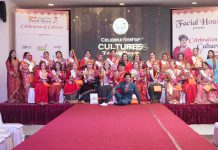
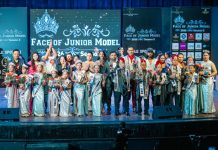
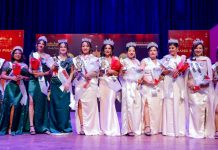
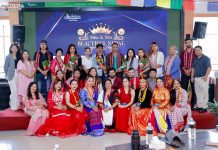








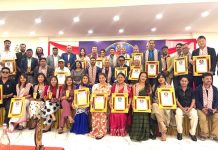




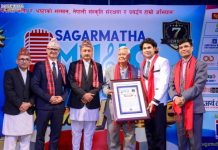
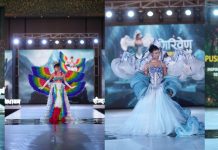









The 21st graduation showcase brought together 54 emerging designers, industry leaders, academic dignitaries and international partners to explore the intersection of cultural heritage, sustainability and futuristic couture.
LALITPUR, 10 OCTOBER 2026: Namuna College of Fashion Technology (NCFT) presented Anantarūpavitānam, its 21st graduation fashion show, at The Plaza, Pulchowk, Lalitpur, celebrating Nepal’s cultural legacy through contemporary design and forward-looking creativity. Inspired by the theme “Cosmic Threads of Heritage: Nepal Beyond Time and Universe,” the showcase explored how traditional knowledge, spirituality, nature and technological advancement can shape the future of fashion.
Meaning “the infinite tapestry of forms,” Anantarūpavitānam reflected the boundless possibilities of creative expression. Featuring 54 graduating designers, six collections and 54 exclusive creations, the event marked the culmination of the students’ academic journey through research-driven concepts, textile experimentation, garment construction and professional presentation.
International fashion choreographer and media personality Rojin Shakya directed the runway presentation, while Shreetika Shakya, Subina Raut, Alish Ranjit and Swastika Bhari coordinated the event.
Six Collections, Diverse Creative Perspectives
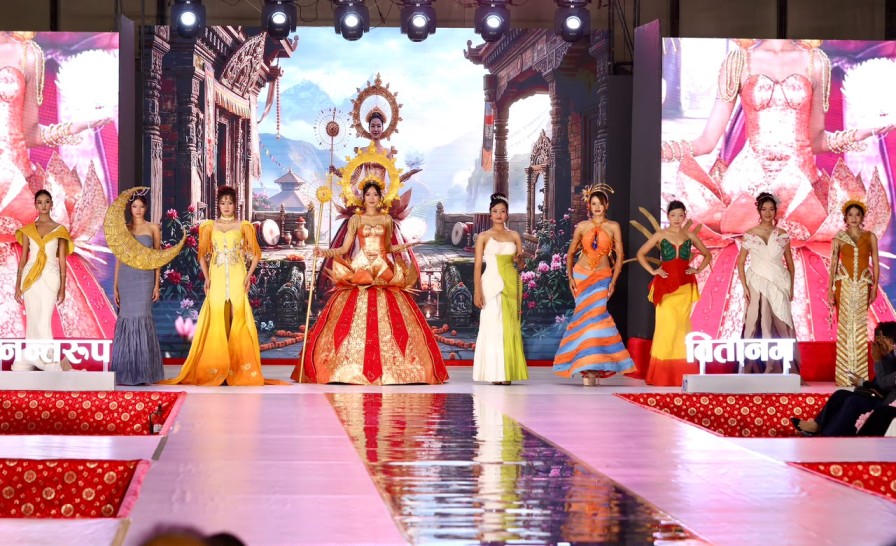
The showcase unfolded through six collections, each interpreting Nepal’s cultural identity through a distinctive design philosophy.
Sequence 1: Forged by Heritage
Drawing inspiration from Paubha art, temple woodcarving, traditional weaving, brasswork and sacred architecture, Forged by Heritage translated Nepal’s artisanal traditions into contemporary couture. Architectural silhouettes, textured surfaces and crimson, black and gold accents conveyed an aesthetic of regal sophistication. The collection was created by Naincy Shrestha, Angela Chaudhary, Sushma Adhikari, Radha Shrestha, Aaditya Thapaliya, Prativa Kandel, Kusum Pariyar and Rusana Lwagun.
Sequence 2: Terra Sutra — Threads of Regeneration
Celebrating agriculture as a cultural foundation and a source of sustainable inspiration, Terra Sutra explored rice, wheat, maize, tea and millet through modular silhouettes, adaptable garments and experimental materials. Created by Isha K.C., Barsha Shahi, Swastika Bhari, Dipika Chaudhary, Rojana Shakya, Asmita Angbang, Yamuna Gurung, Suhangma Limbu and Sajina Khatri, the collection connected rural traditions with environmentally conscious design.
Sequence 3: Nepalese Gilded Spine
Inspired by the traditional jewellery of Nepal’s Magar, Tamang, Newar, Madhesi, Sherpa, Brahmin, Tharu, Gurung and Rai communities, this collection explored adornment as a symbol of identity, continuity and belonging. Contemporary silhouettes, Dhaka textiles and vibrant colours brought cultural ornamentation into a renewed fashion vocabulary. The designers were Archana Chaudhary, Garima Kumari Kathariya, Abisha Maharjan, Shreethika Shakya, Aradhana Gupta, Reshu Khatri, Subina Raut, Isoda Nagarkoti and Kusum Wagle.
Sequence 4: The Shape of Returning
Presented under the theme “Nomads of Eternity,” the collection examined the seasonal migrations of Himalayan herders and their relationship with nature, animals and home. Wool craftsmanship, wet and needle felting, and innovative textile treatments shaped expressive garments reflecting resilience and movement. Nisha Giri, Pratima Baraily, Prabeshika Thamsuhang, Nischal Thapa, Pema Sherpa, Jyoti Gurung, Hangdima Hangma Rai, Prinita Pun Magar and Rasna Bhuju developed the collection.
Sequence 5: Abhaya-Shakti — The Power of Fearlessness
Inspired by Nava Durga and Goddess Laxmi, Abhaya-Shakti celebrated feminine strength through a balance of sculptural structures, warrior-inspired forms, fluid silhouettes and luminous embellishments. The collection portrayed courage, protection, prosperity and grace as complementary expressions of feminine power. It was designed by Riya Bhandari, Grace Rajlaxmi Baral, Shreya Timilsena, Rajiv Adhikari, Kumari Maya Saru Magar, Simran Phanju, Pranita Thapa Magar, Alish Ranjit, Pooja Bhandari and Kabita Shah.
Sequence 6: KALPA SUTRA
Concluding the presentation, KALPA SUTRA envisioned Nepalese heritage through artificial intelligence, cosmic evolution and futuristic couture. Concepts including Cosmic Origin, Himalayan Roots, Heritage Bloom, Spiritual Code, AI Awakening, Nebula Flow, Lunar Guardian, Beyond Time and Future Nepal traced a creative journey from ancestral identity to technological imagination.
Created by Parisha Baram, Nirjala Waiba, Aditya Kausal, Brisha Gurung, Suraj Bhatta, Grishma Karki, Diksha Shrestha, Ritika Mushyan and Bandana Singh, the collection challenged conventional boundaries between tradition and innovation, positioning heritage as a continually evolving source of creative inspiration.
Distinguished Jury and Industry Perspectives
The collections were assessed by an accomplished jury representing fashion education, textile technology, academia, technical training, entrepreneurship and the garment industry.
The panel included Kul Bahadur Basnet, former Vice Chairperson of CTEVT; Colonel Rahul Sharma, Director of NIFT Patna; Pashupati Dev Pandey, President of Garment Association–Nepal (GAN); Prof. Dr. Jaya Pradhan, Campus Chief of Padma Kanya Campus; Rajendra Singh, fashion educator and Deputy Director of the Trade and Export Promotion Centre; Kiran Prakash Saakha, Chairman of Saakha Group; Hema Manandhar, event organizer and social and cultural activist; and Dr. Mohammad Kamruzzaman, also known as Dr. Kamrul, a Bangladeshi textile expert and Southeast Asia regional executive at Hohenstein Group.
Their participation strengthened the connection between academic creativity and professional expectations, emphasizing originality, craftsmanship, material knowledge and presentation.
Fifth NCFT Fashion Catalog Launched
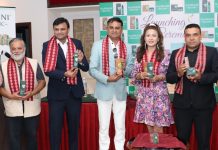
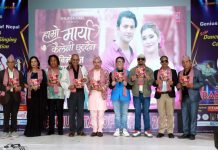
A major highlight was the release of the fifth edition of the NCFT Fashion Catalog, documenting the graduating designers’ concepts, collections and creative achievements. Honorable Ramjee Yadav, Minister of Labour, Employment and Social Security, officially unveiled the publication.
The ceremony was attended by Siddhi Byanjankar, Chief Advisor of the Ministry of Education and Sports; Purbanchal University Vice Chancellor Prof. Dr. Sujan Babu Marahattha; Registrar Prof. Dr. Panna Thapa; Dean of the Faculty of Management Prof. Dr. Uttam Kumar Regmi; and Exam Controller Prof. Balendu Hamal.
NCFT Founder Principal Mrs. Gyani Shova Tuladhar and Vice Principal Jeebeshwor Lal Shrestha were also present, linking the graduating class’s achievements with the institution’s continuing legacy in fashion education.
Beyond documenting the garments, the catalog provides a lasting record of the students’ research, experimentation and design development.
Graduate Designers Behind the Event’s Signature Looks
The designers’ creativity also extended to outfits worn by the institution’s leadership and event team. NCFT Founder Principal Mrs. Gyani Shova Tuladhar wore an ensemble designed by Rojana Shakya and Yamuna Gurung. Choreographer Rojin Shakya appeared in a design by Suhangma Limbu, Subina Raut and Reshu Khatri Chhetri, while host Rubishka Shrestha wore an ensemble created by Diksha Shrestha and Yamuna Gurung.
These contributions demonstrated the students’ versatility across conceptual fashion, personal styling and professional wardrobe design.
Institutional Collaboration and Industry Support
The showcase was organized in association with Garment Association–Nepal (GAN) and the International Labour Organization (ILO). Flextecs powered the event, with Red Bull as co-powered partner.
Additional support came from LIM College, American Language Center, Academy of Art University, DRJ Denim, Sanjay Textiles and New Mahalaxmi Textile, reflecting collaboration across education, textiles and the creative industries.
Through Anantarūpavitānam, NCFT transformed its graduation runway into a platform for cultural interpretation, sustainable thinking and technological imagination. The six collections demonstrated how ancestral craftsmanship and contemporary experimentation can coexist, allowing emerging designers to reinterpret Nepal’s identity for a changing world.
Ultimately, the showcase affirmed a compelling principle: heritage is not simply a legacy to preserve, but a living creative resource that each generation can reshape and carry into the future.


